

Can a cabin filter be used in a submarine (in small compartments)?
Hey there! I'm a supplier of cabin filters, and today I wanna dive into an interesting question: Can a cabin filter be used in a submarine, specifically in those small compartments?
First off, let's talk about what a cabin filter does. If you're familiar with cars, you know that cabin filters are there to clean the air inside the vehicle. They trap all sorts of stuff like dust, pollen, and even some harmful pollutants. For example, our Cabin Filter 1354952 is designed to do just that in a car environment. It's got a fine mesh that catches those tiny particles and keeps the air fresh for the passengers.
Now, submarines are a whole different ballgame. These underwater vessels operate in a sealed environment where air quality is super crucial. The air inside a submarine can get filled with all kinds of contaminants. There are fumes from the engines, waste products from the crew, and even the moisture that can lead to mold growth.
One of the main similarities between a car cabin and a submarine compartment is the need for clean air. In both cases, people are breathing in that confined space, and having good air quality can prevent all sorts of health issues. Just like in a car, where a dirty cabin filter can make the air stuffy and cause allergies, in a submarine, poor air quality can lead to headaches, respiratory problems, and a general decrease in the crew's well - being.
However, there are some major differences too. Submarines operate under high pressures and in a very humid environment. The pressure changes can affect the performance of a filter. A regular cabin filter might not be able to withstand the pressure variations without getting damaged. And the high humidity in a submarine can cause the filter to become saturated quickly. Once a filter is saturated, it loses its ability to trap particles effectively.
Let's take a look at the specifications of our cabin filters. Our Cabin Filter 1K1819653B is made with a certain type of filter media that's great for filtering out common pollutants in a car. But this media might not be suitable for the harsh conditions in a submarine. The filter media needs to be able to resist the high humidity and pressure changes.
In a submarine, the filtration requirements are much more stringent. They need to filter out not only the common dust and pollen but also more dangerous substances like carbon monoxide and other toxic gases. Our cabin filters are mainly designed to deal with the pollutants found in the atmosphere above water, like exhaust fumes from cars and industrial emissions.
But here's the thing. With some modifications, there's a possibility that a cabin filter could be used in a submarine's small compartments. We could work on developing a filter with a more robust structure that can handle the pressure changes. We could also treat the filter media to make it more resistant to moisture. For example, we could use a hydrophobic coating on the filter media. This would prevent the filter from getting saturated with water and keep it working for a longer time.
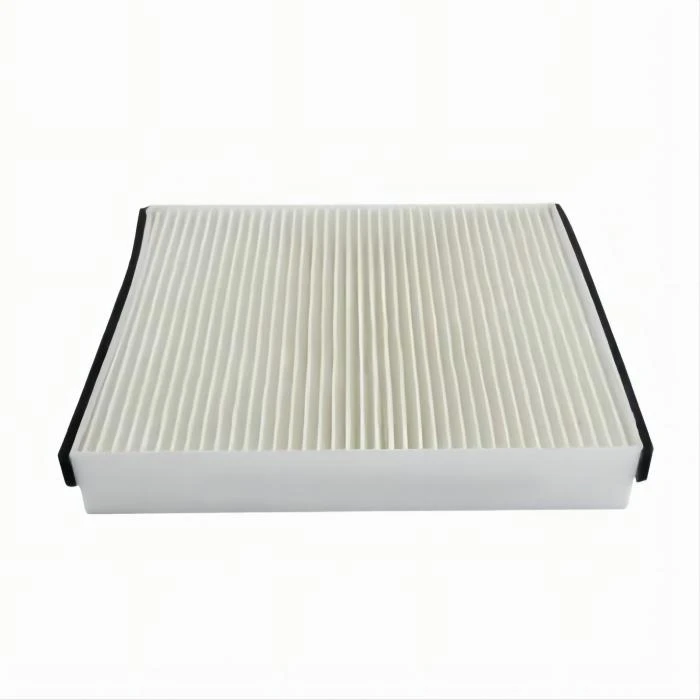

Another aspect to consider is the size and installation. Submarine compartments are often very compact, and the filter needs to fit in those tight spaces. Our cabin filters come in various sizes, but we might need to customize them to fit the specific dimensions of a submarine compartment. The installation also needs to be easy and quick, as the crew might need to replace the filter regularly.
Let's talk about the cost - effectiveness. Using a modified cabin filter in a submarine could potentially be a more cost - effective solution compared to developing a completely new type of filter from scratch. Developing a specialized submarine filter can be very expensive, involving a lot of research and development. By using our existing cabin filter technology and making some adjustments, we could offer a more affordable option.
Now, when it comes to testing. Before we can say for sure that a cabin filter can be used in a submarine, we need to conduct some rigorous testing. We'd need to simulate the conditions inside a submarine, including the high pressure, humidity, and the presence of different contaminants. We could use a test chamber to expose the filter to these conditions and measure its performance over time.
If the testing shows positive results, it could open up a whole new market for our cabin filters. Submarine operators are always looking for ways to improve the air quality in their vessels while keeping the costs down. And if our modified cabin filters can meet their requirements, it would be a win - win situation.
So, to sum it up, while a regular cabin filter might not be directly suitable for a submarine's small compartments, with some modifications and proper testing, there's a good chance that we can make it work. We've got the technology and the expertise as a cabin filter supplier to take on this challenge.
If you're involved in the submarine industry and are interested in exploring the possibility of using our cabin filters, I'd love to have a chat with you. We can discuss the specific requirements of your submarines and see how we can customize our filters to meet your needs. Whether it's the pressure resistance, moisture control, or size customization, we're up for the task. Let's work together to find the best solution for clean air in your submarines.
References
- General knowledge of cabin filter technology and submarine environmental conditions.
- Technical specifications of Cabin Filter 1354952, Cabin Filter 1K1819653B, and Cabin Filter 2048300018.