

Can a stuck engine thermostat damage the engine?
Hey there, fellow car enthusiasts! As a long - time engine thermostat supplier, I've seen it all when it comes to these little but crucial components. One question that keeps popping up in my inbox is, "Can a stuck engine thermostat damage the engine?" Well, let's dig deep into this topic and find out.
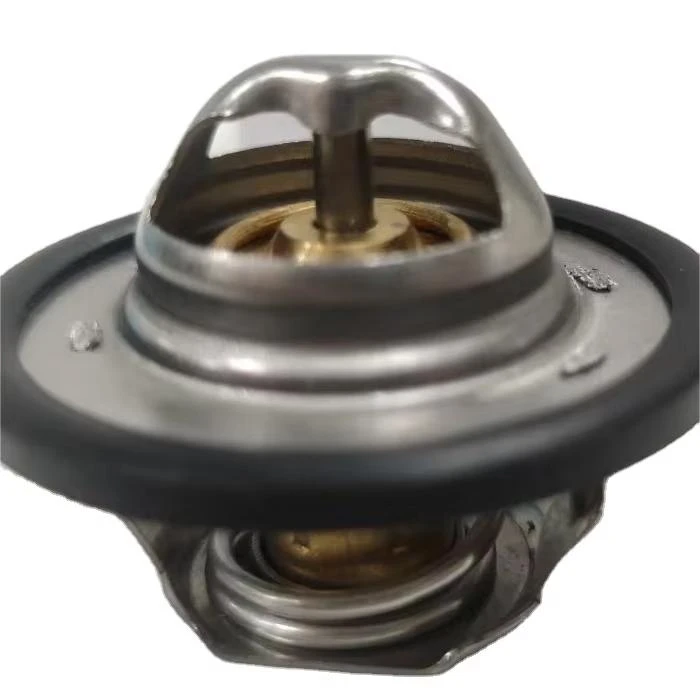
First off, what does an engine thermostat actually do? Think of it as the traffic cop of your engine's cooling system. Its main job is to regulate the flow of coolant between the engine and the radiator. When the engine is cold, the thermostat stays closed. This allows the engine to warm up quickly because the coolant isn't flowing to the radiator to lose heat. Once the engine reaches its optimal operating temperature, usually around 195 - 220 degrees Fahrenheit (90 - 105 degrees Celsius), the thermostat opens up. Coolant then flows freely to the radiator, where it gets cooled down before returning to the engine to absorb more heat.
Now, let's talk about what happens when this little traffic cop gets stuck. There are two main scenarios: a stuck - closed thermostat and a stuck - open thermostat.
Stuck - Closed Thermostat
A stuck - closed thermostat is like a traffic cop who refuses to let any cars (coolant) leave the city (engine). When the thermostat is stuck closed, coolant can't flow to the radiator. As a result, the engine starts to overheat. And overheating is a big no - no for your engine.
Engines are designed to operate within a specific temperature range. When the temperature goes too high, the metal components in the engine start to expand. This can lead to a whole host of problems. For example, the pistons can expand so much that they seize in the cylinders. This is called engine seizure, and it's a nightmare for any car owner. Once an engine seizes, it's often very expensive to repair, and in some cases, the engine may need to be completely replaced.
Another issue caused by overheating is the breakdown of engine oil. Engine oil is like the lifeblood of your engine. It lubricates the moving parts, reduces friction, and helps to keep the engine clean. But when the engine gets too hot, the oil can start to break down. This reduces its lubricating properties, which means more friction between the engine parts. More friction leads to more wear and tear, and over time, this can cause significant damage to the engine.
If you notice that your engine temperature gauge is in the red zone, steam coming from under the hood, or a sweet smell (which could indicate coolant leaking), these are signs that your thermostat might be stuck closed. And trust me, you don't want to ignore these signs.
Stuck - Open Thermostat
On the other hand, a stuck - open thermostat is like a traffic cop who lets all the cars leave the city all the time. When the thermostat is stuck open, coolant flows continuously to the radiator, even when the engine is cold. This means the engine takes longer to reach its optimal operating temperature.
An engine that runs too cold isn't as efficient as it should be. When the engine is cold, the fuel doesn't burn as cleanly. This can lead to increased fuel consumption and higher emissions. Additionally, cold engines are more prone to carbon buildup on the valves and pistons. Carbon buildup can reduce engine performance, cause rough idling, and even lead to misfires.
Over time, the constant exposure to cold coolant can also cause stress on the engine components. The metal parts contract in the cold, and this repeated expansion and contraction can lead to cracks in the engine block or cylinder heads. And as we all know, a cracked engine block is a major problem that requires extensive and costly repairs.
Real - World Examples
I've had customers come to me with stories of engine damage caused by stuck thermostats. One customer had a car that kept overheating. After some investigation, we found that the thermostat was stuck closed. By the time they brought the car in, the engine had already suffered significant damage. The pistons were seized, and the engine block had some minor cracks. The repair bill was a whopping $3000!
Another customer had a car with a stuck - open thermostat. They noticed that their fuel economy had dropped significantly, and the engine was running rough. When we replaced the thermostat, the engine performance improved, and the fuel consumption went back to normal.
How to Prevent Thermostat Issues
The good news is that thermostat problems can be prevented. Regular maintenance is key. You should have your cooling system checked at least once a year. A professional mechanic can inspect the thermostat, coolant level, and the overall condition of the cooling system.
It's also important to use high - quality thermostats. At our company, we offer a wide range of top - notch engine thermostats. For example, we have the Auto Thermostat 96984104, the Cooling Water Thermostat 24405922, and the Automotive Thermostat 7700872554. These thermostats are designed to be reliable and long - lasting, so you can have peace of mind knowing that your engine is in good hands.

Conclusion
So, to answer the question, "Can a stuck engine thermostat damage the engine?" The answer is a resounding yes. Whether it's a stuck - closed or stuck - open thermostat, it can lead to a variety of engine problems, from overheating and engine seizure to reduced performance and increased fuel consumption.
If you're in the market for a new engine thermostat or have any questions about thermostat maintenance, don't hesitate to reach out. We're here to help you keep your engine running smoothly. Let's work together to ensure your car's engine stays in top shape.
References
- "Automotive Cooling Systems" by Richard H. Parr.
- "How Car Engines Work" - Online automotive encyclopedia.