

How does the design of a cabin filter affect its efficiency?
Hey there! As a cabin filter supplier, I've seen firsthand how crucial the design of a cabin filter is for its efficiency. In this blog, I'll break down the key design elements that impact a cabin filter's performance and share some insights into why choosing the right filter matters.
The Basics of Cabin Filter Efficiency
First off, let's talk about what we mean by "efficiency" when it comes to cabin filters. Simply put, a cabin filter's efficiency refers to its ability to remove contaminants from the air flowing into your vehicle's cabin. These contaminants can include dust, pollen, mold spores, bacteria, and even harmful gases like ozone and nitrogen dioxide.
A high - efficiency cabin filter can significantly improve the air quality inside your car, making your driving experience more comfortable and healthier. It can also protect your vehicle's HVAC system from damage caused by dirt and debris, which can save you money on maintenance in the long run.

Key Design Elements Affecting Efficiency
Filter Media
The filter media is the heart of the cabin filter. It's the material that actually traps the contaminants. Different types of filter media have different levels of efficiency.
- Fiberglass Media: This is a common and affordable option. Fiberglass fibers are woven together to create a mesh that catches larger particles. However, it's not as effective at capturing smaller particles like pollen and bacteria. The efficiency of fiberglass media can vary, but it's generally on the lower end compared to other options.
- Synthetic Media: Synthetic materials, such as polyester or polypropylene, are often used in higher - end cabin filters. These materials can be engineered to have a more uniform pore size, which allows them to capture a wider range of particle sizes more effectively. Synthetic media can also be treated with anti - microbial agents to prevent the growth of mold and bacteria. For example, our Cabin Filter 2048300018 uses a high - quality synthetic media that provides excellent filtration efficiency.
- Activated Carbon Media: Activated carbon is great at adsorbing gases and odors. When combined with other filter media, it can create a multi - stage filtration system. The porous structure of activated carbon provides a large surface area for gases to stick to. This is especially useful in urban areas where there are high levels of exhaust fumes and other pollutants. Our Cabin Filter 1354952 features an activated carbon layer for enhanced odor and gas removal.
Filter Thickness and Pleating
The thickness of the filter media and the way it's pleated also play a big role in efficiency.
- Thickness: A thicker filter media generally means more surface area for particles to be trapped. However, it also increases the resistance to airflow. If the resistance is too high, it can put a strain on the vehicle's HVAC system and reduce the airflow into the cabin. So, there's a balance to be struck. Our engineers work hard to find the optimal thickness for each filter design to ensure both high efficiency and good airflow.
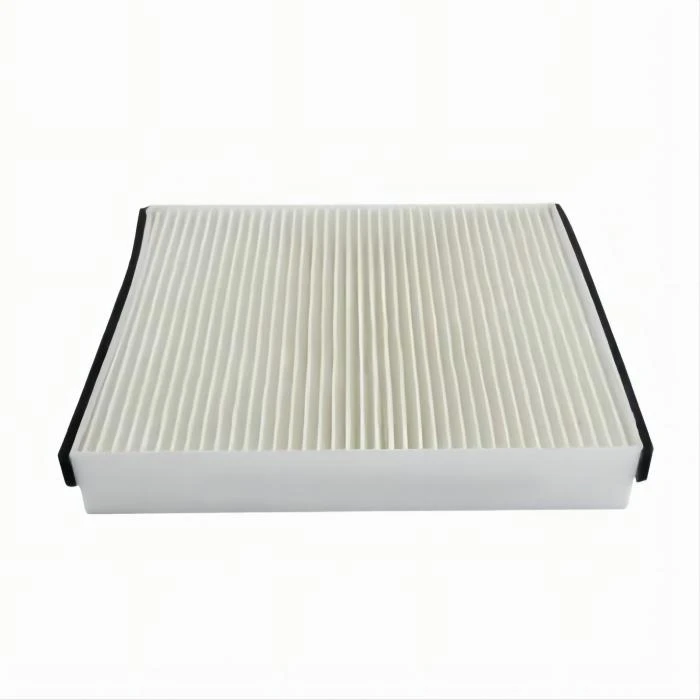
- Pleating: Pleating the filter media increases its surface area without taking up too much space. The more pleats a filter has, the more surface area it has for filtration. A well - designed pleat pattern can also ensure that the air flows evenly through the filter, maximizing its efficiency. Our Cabin Filter 1K1819653B has a unique pleating design that provides a large filtration area while maintaining a low pressure drop.
Frame Design
The frame of the cabin filter is often overlooked, but it's important for maintaining the shape of the filter and ensuring a proper seal in the vehicle's filter housing.
- Rigid Frames: A rigid frame, usually made of plastic or metal, helps keep the filter media in place and prevents it from collapsing under the pressure of the airflow. This is especially important for filters with a large number of pleats or thick media. A well - constructed frame also ensures a tight seal, preventing unfiltered air from bypassing the filter.
- Sealing Gaskets: Many cabin filters come with sealing gaskets around the edges. These gaskets are made of rubber or foam and help create an airtight seal between the filter and the housing. A good seal is essential for the filter to work efficiently, as it ensures that all the air entering the cabin passes through the filter media.
Testing and Certification
To ensure that our cabin filters meet high standards of efficiency, we conduct rigorous testing. We use industry - standard test methods to measure the filter's ability to capture particles of different sizes and to remove gases and odors.
Some of the common certifications for cabin filters include:
- ISO 16890: This international standard measures the filtration efficiency of air filters based on the particle size. It provides a more accurate and comprehensive assessment of a filter's performance compared to older standards.
- ASHRAE 52.2: This standard is widely used in North America to evaluate the performance of air filters. It measures the filter's ability to capture particles in three size ranges: coarse, fine, and ultrafine.
When you choose a cabin filter from us, you can be confident that it has been tested and meets or exceeds these industry standards.
Why Choose Our Cabin Filters?
We understand that there are many options out there when it comes to cabin filters. So, why should you choose ours?
- Quality Design: Our filters are designed with the latest technology and materials to provide the highest level of efficiency. We pay attention to every detail, from the filter media to the frame design, to ensure that our filters perform at their best.
- Wide Range of Options: We offer a variety of cabin filters to suit different vehicles and customer needs. Whether you're looking for a basic filter for everyday use or a high - end filter with advanced features like activated carbon, we have you covered.
- Reliability: We have a reputation for producing reliable and durable cabin filters. Our filters are built to last, so you can enjoy clean air in your vehicle for a long time without having to worry about frequent replacements.
Contact Us for Purchase and洽谈
If you're interested in purchasing our cabin filters or have any questions about our products, we'd love to hear from you. We're always happy to help you find the right filter for your vehicle and provide you with more information about our products and services.
References
- ISO 16890:2016, Air filters for general ventilation — Determination of the filtration performance.
- ASHRAE 52.2 - 2017, Method of Testing General Ventilation Air - Cleaning Devices for Removal Efficiency by Particle Size.