

How does the ignition module interact with the spark plugs?
Hey there! As a supplier of ignition modules, I'm super excited to chat with you about how these nifty little devices interact with spark plugs. It's a topic that might seem a bit technical at first, but I'll break it down in a way that's easy to understand.
Let's start with the basics. What exactly is an ignition module? Well, it's a crucial part of your vehicle's ignition system. There are different types, like the Igniter Control Module, Ignition Control Unit, and Car Ignition Module. Each one plays a specific role in getting your engine up and running.
The ignition module's main job is to control the timing and intensity of the electrical current that goes to the spark plugs. Think of it as the conductor of an orchestra, making sure all the instruments (in this case, the spark plugs) play at the right time and with the right amount of power.
So, how does the interaction between the ignition module and the spark plugs actually work? It all starts with the engine's control unit, which sends a signal to the ignition module. This signal tells the ignition module when it's time to fire up the spark plugs.
Once the ignition module receives the signal, it kicks into action. It takes the low-voltage electrical current from the battery and transforms it into a high-voltage current. This high-voltage current is essential because it's what creates the spark at the spark plugs.
The ignition module uses a process called induction to boost the voltage. Inside the ignition module, there's a coil that stores electrical energy. When the ignition module gets the signal from the engine control unit, it releases this stored energy in a sudden burst. This burst of energy creates a high-voltage pulse that travels through the ignition wires to the spark plugs.
When the high-voltage pulse reaches the spark plugs, it jumps across a small gap between the electrodes of the spark plug. This jump creates a spark, which ignites the air-fuel mixture in the engine's combustion chamber. And just like that, your engine comes to life!
Now, let's talk about why this interaction is so important. If the ignition module isn't working properly, it can cause all sorts of problems. For example, if the timing of the spark is off, the air-fuel mixture might not ignite at the right time. This can lead to poor engine performance, reduced fuel efficiency, and even engine misfires.
A faulty ignition module can also affect the intensity of the spark. If the spark isn't strong enough, the air-fuel mixture might not ignite completely. This can result in unburned fuel being expelled from the engine, which not only wastes fuel but can also cause damage to the catalytic converter.
As a supplier of ignition modules, I know how important it is to have a high-quality ignition module in your vehicle. That's why we offer a wide range of ignition modules that are designed to meet the needs of different vehicles and engines. Our ignition modules are built to last, with high-quality materials and advanced technology.

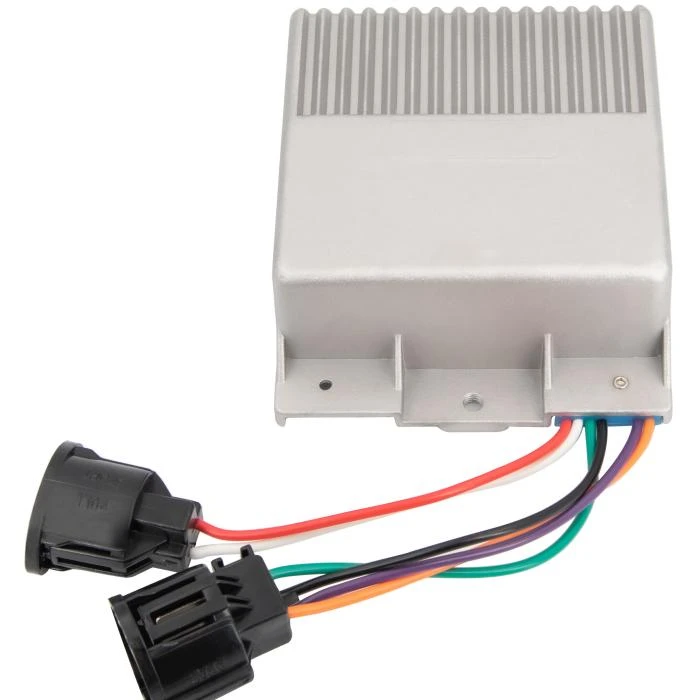
Whether you're a car enthusiast looking to upgrade your vehicle's ignition system or a mechanic in need of reliable ignition modules for your customers, we've got you covered. Our team of experts is always on hand to answer any questions you might have and to help you find the right ignition module for your needs.
If you're interested in learning more about our ignition modules or if you're ready to place an order, don't hesitate to get in touch. We're here to make the process as easy and hassle-free as possible. Just reach out to us, and we'll work with you to find the best solution for your ignition needs.
In conclusion, the interaction between the ignition module and the spark plugs is a critical part of your vehicle's ignition system. A well-functioning ignition module ensures that the spark plugs fire at the right time and with the right amount of power, which is essential for optimal engine performance. So, if you're experiencing any issues with your vehicle's ignition system, it might be time to check your ignition module. And if you're in the market for a new ignition module, we'd love to be your supplier.
References
- Automotive Ignition Systems: Principles, Diagnosis, and Service by William H. Crouse and Donald L. Anglin
- Motor Vehicle Technology: Principles, Diagnosis, and Service by Thomas D. Gillespie